
0
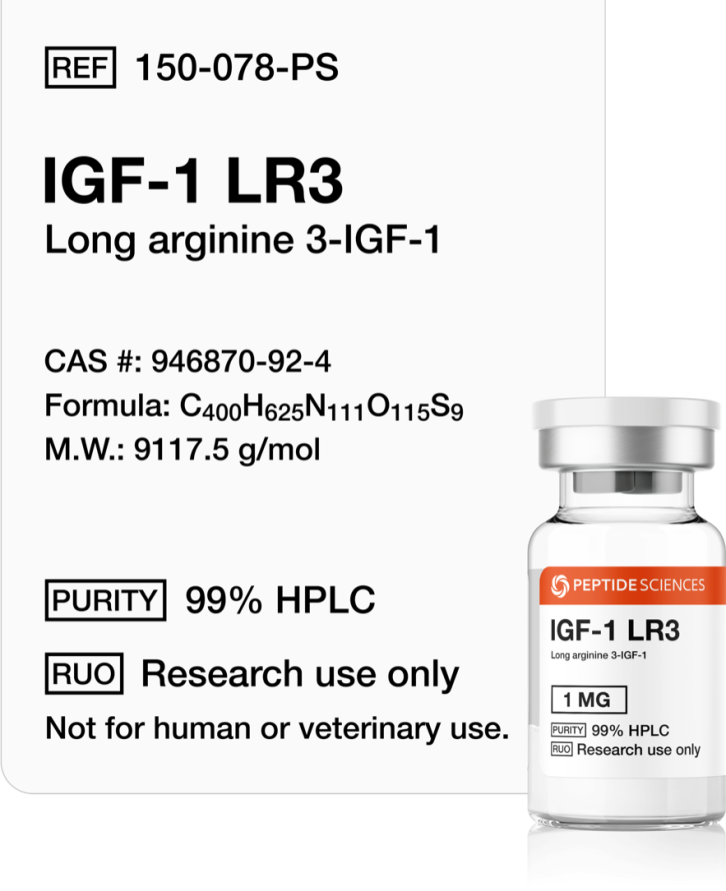
IGF-1 LR3 protein (Qk041)
98.24$
- EUR: £ 85.00
Description
IGF-1 LR3: What It Is, Benefits, How It Works & Safety Overview
IGF-1 LR3 is a synthetic analog of insulin-like growth factor-1 (IGF-1), a naturally occurring hormone involved in cell growth, muscle development, and tissue repair. Due to its enhanced stability and prolonged activity, IGF-1 LR3 has attracted significant interest in scientific research and performance-related discussions.
This guide explains what IGF-1 LR3 is, how it works, its potential benefits, and the current scientific understanding surrounding its safety.
What Is IGF-1 LR3?
IGF-1 LR3 (Insulin-Like Growth Factor-1 Long Arg3) is a modified version of natural IGF-1.
It differs from standard IGF-1 due to two structural changes:
-
An added arginine residue at position 3
-
A longer amino acid chain that extends its half-life
These modifications make IGF-1 LR3 more resistant to breakdown, allowing it to remain active in the body longer than natural IGF-1.
According to research indexed by PubMed, IGF-1 plays a crucial role in cellular proliferation and regeneration, especially in muscle and connective tissue.
How IGF-1 LR3 Works in the Body
IGF-1 LR3 interacts with IGF-1 receptors and insulin receptors at the cellular level. Once activated, these receptors trigger signaling pathways responsible for:
-
Cell growth and differentiation
-
Protein synthesis
-
Muscle cell regeneration
-
Tissue repair processes
Unlike regular IGF-1, IGF-1 LR3 binds less strongly to IGF binding proteins (IGFBPs), allowing more of the compound to remain biologically active.
NIH research shows that IGF-1 is closely linked to anabolic signaling and metabolic regulation.
Potential Benefits of IGF-1 LR3
While research is ongoing, IGF-1 LR3 is often discussed in relation to the following potential effects:
Muscle Growth Support
IGF-1 is known to stimulate muscle cell hyperplasia, meaning it may contribute to the formation of new muscle fibers rather than just increasing their size.
Tissue Repair and Recovery
Scientific studies suggest IGF-1 plays a role in cell regeneration and wound healing, making it relevant in recovery-focused research.
Enhanced Nutrient Uptake
IGF-1 signaling is associated with improved amino acid and glucose uptake into cells, supporting metabolic efficiency.
Anti-Catabolic Properties
IGF-1 activity may help reduce muscle protein breakdown, especially during periods of physical stress.
IGF-1 LR3 vs Regular IGF-1
| Feature | IGF-1 | IGF-1 LR3 |
|---|---|---|
| Half-life | Short | Extended |
| Stability | Lower | Higher |
| IGFBP Binding | Strong | Reduced |
| Biological Activity | Moderate | Prolonged |
Because of its longer activity window, IGF-1 LR3 is commonly referenced in research contexts requiring sustained IGF-1 receptor stimulation.
Scientific Research on IGF-1 LR3
Most available data focuses on IGF-1, not exclusively IGF-1 LR3. However, IGF-1 research provides insight into the mechanisms behind LR3’s effects.
Authoritative sources:
-
PubMed – IGF-1 cellular signaling research
https://pubmed.ncbi.nlm.nih.gov -
NIH / NCBI – Insulin-Like Growth Factor overview
https://www.ncbi.nlm.nih.gov -
National Institute of Diabetes and Digestive and Kidney Diseases (NIDDK)
https://www.niddk.nih.gov
These institutions highlight IGF-1’s role in growth regulation, metabolism, and tissue maintenance.
Safety, Risks & Side Effects
Because IGF-1 LR3 is a modified compound, long-term human data is limited.
Reported concerns associated with IGF-1 activity include:
-
Hypoglycemia (low blood sugar)
-
Water retention
-
Joint discomfort
-
Potential overstimulation of cell growth
NIH publications emphasize that excessive IGF-1 activity may be associated with abnormal cell proliferation, reinforcing the importance of controlled research environments.
Legal & Regulatory Status
IGF-1 LR3 is not approved for medical use in many countries and is often classified as a research compound only. Regulations vary significantly by region.
Always consult local laws and regulatory guidelines.
Reviews
There are no reviews yet.